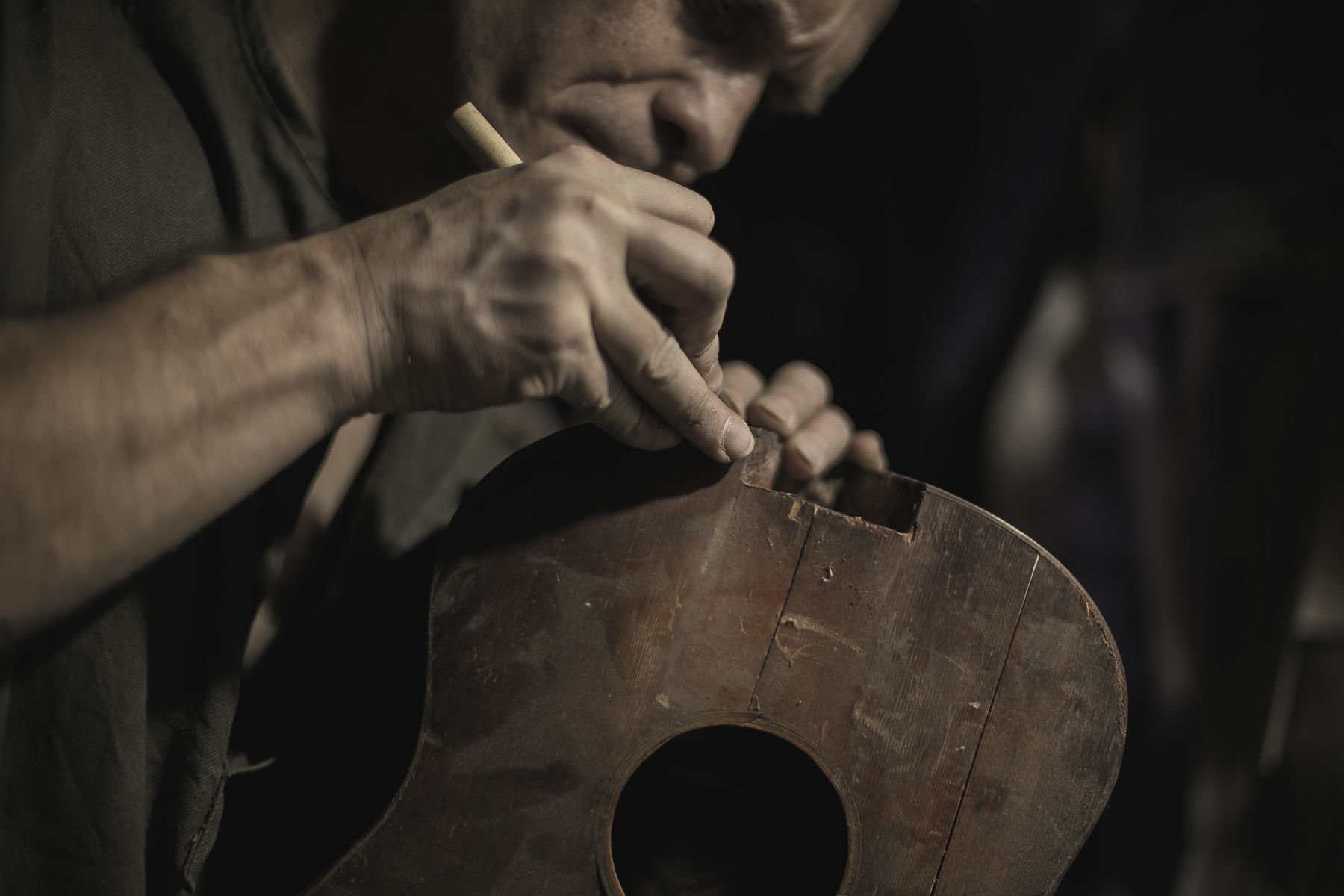
Professional view
What the work looks like
Lutherie exists in repair shops, small studios, factories, music schools, orchestras, museums, and instrument communities worldwide.
A day can include
- Inspect an instrument and document geometry, finish, hardware, and sound-related concerns.
- Shape or fit small parts with high precision and controlled hand tools.
- Balance wood movement, humidity, glue, setup, player feel, and repair judgment.
Tools & materials
sprucemaplerosewood alternativesplaneschiselsbending formshide glue or modern adhesivesstrings
Skills that matter
- fine layout
- curved shaping
- joinery
- setup
- sound listening
- repair judgment
How people learn this career
- Lutherie schools
- repair-shop apprenticeship
- guild resources
- specialty workshops
- portfolio projects
Start with a path near you: school, mentorship, apprenticeship, technical training, college, or supervised work.
Try it now
Explore the work safely.
- Study a safe instrument exterior and draw its parts without disassembling it.
- Make a paper side profile that labels bridge, neck, body, and scale.
- Practice careful measurement and surface observation on non-historic scrap.