
Steel sheet
The flexible rectangular plate is the complete hand tool. Its thickness and stiffness affect how much it bows.
Prepare a fine turned hook, bow the steel card under control, and lift thin shavings from difficult grain.
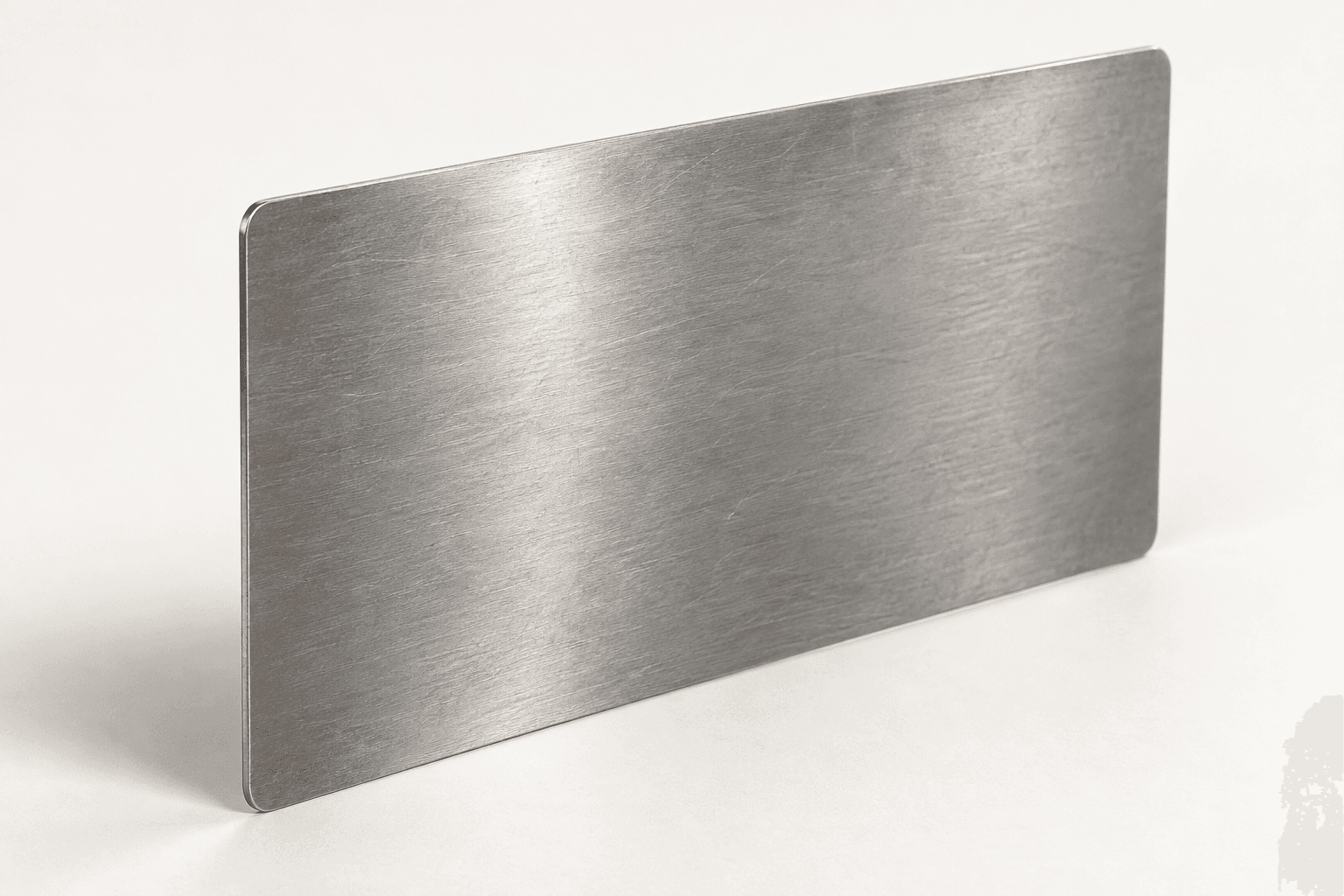
An original educational poster identifies 6 documented features of this one-piece tool. The numbered descriptions remain readable below the artwork on narrow screens.
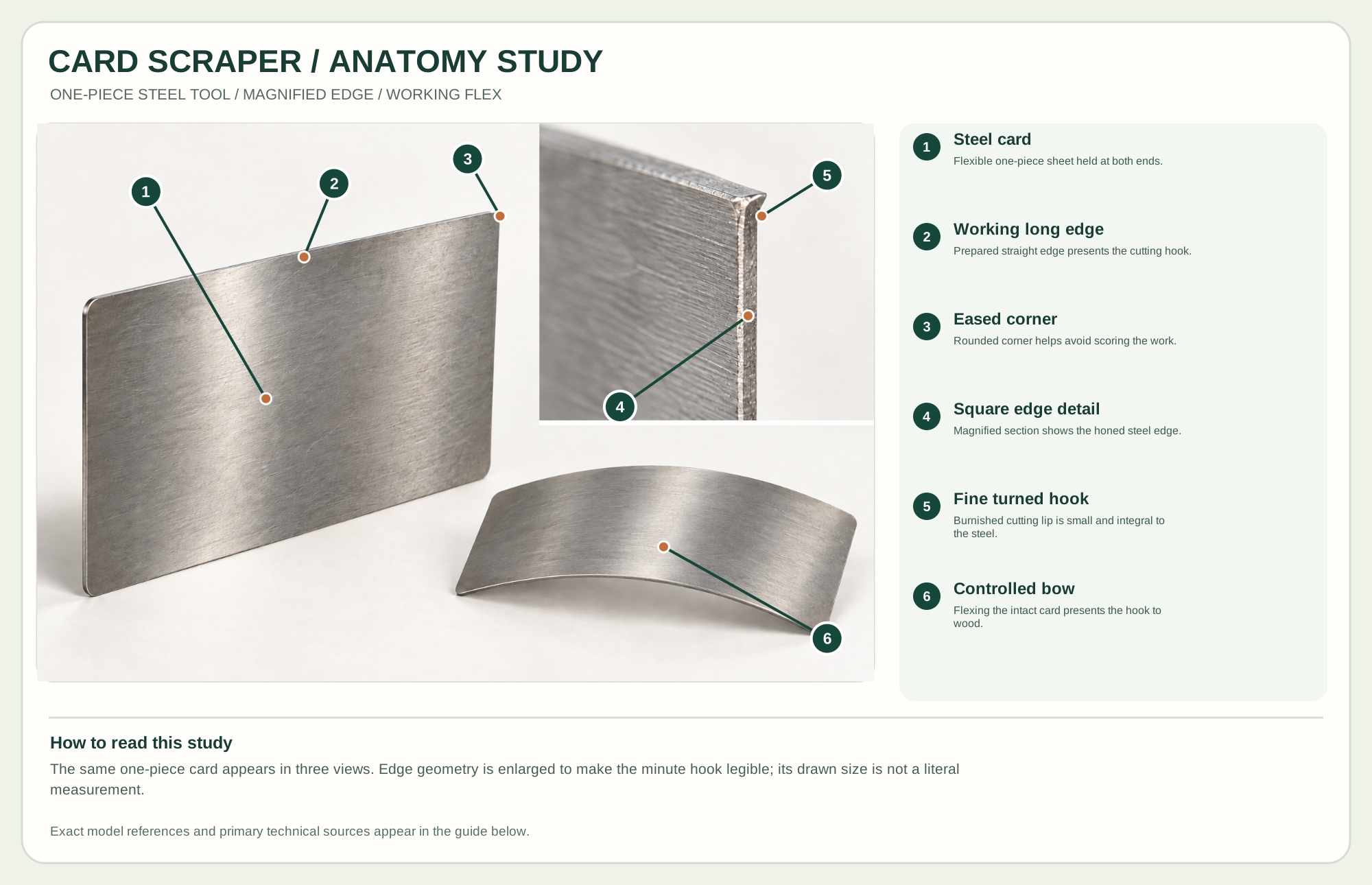
Flexible one-piece sheet held at both ends.
Prepared straight edge presents the cutting hook.
Rounded corner helps avoid scoring the work.
Magnified section shows the honed steel edge.
Burnished cutting lip is small and integral to the steel.
Flexing the intact thin card presents the hook to wood.
Technical references: Lie-Nielsen official hand scraper instructions · Lie-Nielsen official hand scraper product. Lie-Nielsen's instructions ground the intact flexible sheet, square long edges and burnished hook. Magnified and flexed views explain one tool, not disassembly. Original educational artwork depicts the intact tool and magnified features; the additional views are not detachable parts.
A card scraper is a single thin steel sheet, not an assembly of detachable parts. The flexible .020-inch Lie-Nielsen hand scraper grounds the bowed working view; stiffer or harder cards need less flex and their own maker guidance. A square edge may cut fine work as supplied, while a small burnished hook gives more aggressive cutting. The anatomy study shows the intact card, a magnified edge detail and a bowed working state.
The factory-square edge can be used for fine work; when worn, filing and honing restore it. Burnishing can turn a slight hook for a stronger cut. Pushing or pulling a suitable flexible scraper with a controlled bow presents the edge to wood. A cutting edge produces thin shavings, while a dull or badly rolled one makes dust, chatter or excessive heat.
The flexible rectangular plate is the complete hand tool. Its thickness and stiffness affect how much it bows.
Each long edge can be prepared for scraping, so orientation and edge condition matter.
Softened corners help prevent point scratches while the edge sweeps across a board.
Jointing and honing leave a clean ninety-degree arris before a hook is turned.
A burnisher moves only a small amount of steel at the edge. The study exaggerates its profile for explanation; it is not a detachable part.
These decisions make the mechanism useful at the bench.
A fresh square factory edge may be ready. When renewing a worn one, remove the old hook, joint the edge straight and hone it square before making a new hook.
Use a suitable smooth hardened burnisher with controlled pressure and angle; more force is not necessarily a better edge.
Grip the ends, flex the center slightly and make light passes with the hook engaged. Work with the grain direction when possible.
A sharp scraper can refine reversing grain that tears under a plane.
Remove glue residue, mill marks and tiny high spots without sanding a broad area.
Use a scraper before fine abrasive work when a shaving is more controlled than more grit.
Use the steps for a first pass, then inspect the work before changing the setup.
Dust alone often means the hook is worn, the angle is wrong or pressure is too high.
The thin card warms quickly. A scraper holder can reduce hand discomfort on longer work.
The magnified and flexed views show geometry and use; they are not extra components to install.
Curved or gooseneck scrapers reach profiles; a rectangular card suits broad flat and gently curved areas.
Different alloys and thicknesses change edge preparation and flex; follow the maker's burnishing advice.
A holder provides more pressure and heat insulation but changes grip and feedback.
Secure the work, protect sharp edges and release any stored clamping pressure before adjustment or maintenance.
Inspect hook sharpness, edge preparation, tilt and grain direction.
Reduce pressure, support the work and try a lighter bow or a fresh edge.
Ease corners and keep the working edge level with the intended surface.
Use the exact model documentation for setup, limits and replacement parts. These lessons, documents and model pages teach relevant techniques or help compare real variations.
Maker explanation of the flexible .020-inch card and prepared long edges.
Different harder scraper family; its maker warns against strong lateral flexing.
Official demonstration of forming a controlled scraper hook.
These maker-owned links document relevant tools and tool brands. A product brand may use another company's factory; compare the exact model before choosing parts or accessories.
Handles, irons, saw plates, clamping pads and other replacements vary by maker and model. Use the maker's documentation before changing a component.
Compare the Scraping Tools family →Continue through the Tools library